Tweet

16 May 2013
Top Moscow's Russian Chocolate Shops
Tweet


Chocolatier
5 Schyolkovskoe Shosse, (926) 616 7961, m. Cherkizovskaya, open daily 10 am-8 pm, chocolatier.ru
Only three years old, Chocolatier has earned a reputation as one of Moscow’s best artisanal chocolate makers. Its shop sells handmade chocolate, as well as molds, thermometers, mixers and other equipment, and also hosts master classes.
Confael
12 Nikitsky Bulvar, bldg. 3, (495) 690 5617, m. Arbatskaya, open weekdays 10 am-10 pm, Sat. and Sun. 10 am-12 midnight, confael.ru
Confael produces a wide array of high-end truffl es and chocolates, including chocolate sculptures made to order. Chocoholics can sample desserts including chocolate fondue with vanilla souffl e at the boutique’s adjoining cafe.
Confectionary
22 Ul. Pyatnitskaya, (495) 951 3764, m. Tretyakovskaya, open weekdays 9 am-8 pm, Sat. 10 am-6 pm, closed Sun.
This small, old-fashioned shop weighs out bags of all the most popular mass-produced candy from Krasny Oktyabr and other factories, such as Romashki, Belochka and Maska.
Korkunov
13/16 Bolshaya Lubyanka, bldg. 1, (495) 625 6411, open daily 10 am-8 pm, korkunov.ru
Founded in 1999 by businessman Andrei Korkunov, the Korkunov company was purchased by Wrigley in 2007. Though Korkunov’s massproduced bars can be found all over Russia, it sells handmade chocolates exclusively at its Moscow boutique.
Rot Front
13/15 Novokuznetsky Per., (495) 959 2951, m. Novokuznetskaya, open daily 8 am-8 pm, Sun. 9 am-5 pm
Russia’s oldest chocolate factory, famous for popular candies such as Krasnaya Shapochka, maintains a shop near Paveletskaya where you’ll fi nd all its signature caramels, chocolates, waffl e cakes and halvah.
Source: http://themoscownews.com/arts/20120326/189563834.html
Image Source: http://www.chocolatecakeblog.com/chocolate-cake-2/chocolate-russian-doll-cakes
Image Source: http://www.chocolatecakeblog.com/chocolate-cake-2/chocolate-russian-doll-cakes
Three Russian Confectionaries - One Story
Tweet
The Red October Confectionary initially was formed in 1867 by German T.F. vonEinem/Эйнемъ. In 1918 was nationalized and renamed as 'State Confectionary Factory №1, previously Einem Partnership'. Adding to the name 'previously Einem Partnership' says about its popularity among the customers. In 1922 confectionary was renamed again - 'The Red October'. Confectionary producing now lots chocolate products of a different taste, but the most popular one is called Alyonka.
Alyonka/Алёнка is a legendary chocolate bar has started to produce and sell in Soviet Union in 1966, brand Alyonka (see link) became a symbol of a happy childhood times for several generations now. Image of a young girl is a collected from different photos of a young russian girls. Artist, who created this image was inspired by his small daughter. I remember this chocolate bars in a very small packaging about 10cm long, that we ate on occasions and holidays. These days, you can get any size of this famous russian chocolate 'Alyonka' (see link).
Sweet admirer says (see link) "I was surprised by the waxy flavorless nature of the chocolate and was wondering if this is specific to that type of candy or whether Russian chocolate leans toward a different flavor and texture profile than American chocolate. James H. Johnson, director of international marketing at the Chocolate Manufacturers Association talks about the difference in Russian chocolate in the CNNmoney.com article: "Another reason for the rise of Russian chocolate is that Russian tastes are different. 'Russian chocolate has a different taste and feel,' says Johnson. 'It's grittier because they use more cocoa. It's not as sweet.' CNN article on Red October (see link).
2. Abrokosov&Sons became the Babaevskiy Confectionary
According to this source, after the Russian Food Industry Minister visited Czech Republic in 1967, where he was so impressed by tasty local candies. When he returned back (former USSR), he gathered in Moscow RotFront representatives of all confectionary fabrics, where was made an order to make the same candies as the example was provided, but without any initial recipe. In 1967, in Vladivostok Confectionary Fabric, technolog Anna Chulkova developed candies named "Ptich'e moloko/Birds milk". Vladivostok Confectionary Fabric was the only one in the USSR that meet the plan for the candies production by producing the 12 tonn (423 287,5 ounce US/26 455,5 pound US).
I would like to introduce to you three main Russian confectionaries that have been popular for over the 200 years now. All three Confectionaries have a very similar history and currently operate in Russia.
1. Einem became The Red October Confectionary
 |
| Cocoa by Einem Partnership |
 |
| The Red October Concessionary Factory, Milk Chocolate Alyonka |
 |
2. Abrokosov&Sons became the Babaevskiy Confectionary
 |
| Abrikosov&Sons Partnerships |
 |
Babaevskiy 'Elite' Chocolate
75% Cocoa
|
Another confectionary factory named as Babaevskiy (see link), formed in 1804 by Abrikosov&Sons, in 1918 the concessionary was nationalized by the Soviets and in 1922 it was named as Babaevskiy confectionary factory. The product assortment include chocolates, candies, caramels, gift packaged sweets for kids and in the future the assortment will be extended.
3. Lenov family became the RotFront Confectionary
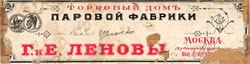 |
| Leonov's Factory, Moscow |
And finally, Rot Front confectionary was initially formed in 1826 by Lenov family. In November 1918 the Chocolate factory was nationalized and in 1931 it was renamed as RotFront. One of the popular brands is brand 'Ptich'e Moloko/Bird's milk' is a soufflé based with a chocolate glaze candies - was extremely popular during the Soviet times.
 |
| Candies 'Ptich'e Moloko' (if translated - birds milk but this is nothing to do with a birds milk) by RotFront Factory |
During that time it was an order to all confectionaries to produce 6 tons (211643,7 ounce US/13227,7 pound US) of product. Later on, due to the machine process development vs hand made, production of the "Ptich'e moloko/Birds milk" reached 35 ton (1234588,7 ounce US/77140 pound US) monthly. The recipe and technological process was concidered to be the best in the USSR. First experimental orders were produced by the RotFront Factory in 1968 but due to the small amount of production the USSR Food Industry Ministry did not approve this recipe.
United Confectionary Manufacturers & Chocolate and Cocoa Museum
In 2007, all three confectionaries form the United Confectionary Manufacturers organization (see link).
United Confectionary Manufacturers Logo
 |
| The Red October Factory Babaevskiy, RotFront United Confectionary Manufacturers |
And also the Chocolate and Cocoa Museum of History in Moscow (see link) was created by the United Confectionary Manufacturers.
If you are interested in Market Research Report - Chocolate Confectionary in Russia by Euromonitor International, please follow this link.
Image sources:
http://www.za-partoi.ru/archive/?article=134&rub=77
http://www.rotfront.uniconf.ru/ru/tradizii
http://szhaman.livejournal.com/134116.html?thread=1815012
http://popsop.com/wp-content/uploads/alenka_sovietic_brand.jpg
If you are interested in Market Research Report - Chocolate Confectionary in Russia by Euromonitor International, please follow this link.
* Please note that the current Russian chocolate and sweets market is not limited to these three confectionaries. The competition comes from many local and foreign companies
http://www.za-partoi.ru/archive/?article=134&rub=77
http://www.rotfront.uniconf.ru/ru/tradizii
http://szhaman.livejournal.com/134116.html?thread=1815012
http://popsop.com/wp-content/uploads/alenka_sovietic_brand.jpg
------------------------------------------------------------------------------------------------------------------------------------
To see Russian chocolate click here, candies click here and handmade candies click here.21 Jan 2013
History recreation by Parfenov
Tweet

 |
| Image source |
I like Leonid Parfenov's Russian historical project - Kakie nashi godi. I adore his style and creativity. He is showing the Russian history - good and bad, showing how Russian people adapt, what problems they were facing.
His recent historical project - Kakie nashi godi is very popular now, each seria dedicated to a year or decade of a Soviet/Russian history.
Leonid Gennadievich Parfenov
(Russian: Леонид Геннадьевич Парфёнов) is a Russian news anchor, journalist and an author of some popular TV shows. From December 3, 2004 until December 20, 2007 he was an Editor-in-Chief of the Russian edition of Newsweek. (Source).

The other Parfenov's historical project was a collection of TV series called Namedni.
"Namedni 1961-2003: Our Era"/"Наме́дни 1961—2003: Наша Эра" Documentary television series on the history of the USSR and Russia in the second half of the XX century, the NTV channel. Author and presenter - Leonid Parfenov. Each episode is dedicated to the events, people and events in the Soviet Union (1992 - Russia) in 1961-2003. The series were later released on VHSi DVD.
 |
| Image source |
If you speak Russian, here you can watch all the series of Namedni by Parfenov.
19 Jan 2013
It is a Manly drink!
Tweet
This product is specifically marketed for men which is quite new for Russian consumer.
'Imunele for Men' comes in a big bottle with a double dose of lactobactiries, vitamins and minerals.
It comes in two flavours - coffee and spiced apple.
 |
| Image source Imunele FOR MEN |
22 Mar 2012
Doing business in Russia for US companies
Tweet

Market Overview
- With over 140 million consumers, a growing middle class, and almost unlimited infrastructure needs, Russia remains one of the most promising markets for U.S. exporters.
- Russia is the world’s 11th largest economy by nominal GDP, 6th largest by PPP and has the highest per capita GDP ($13,236) of the BRIC countries. It is an upper middle income country, with a highly educated workforce and sophisticated, discerning consumers.
- Russia’s economy is still recovering from the economic crisis that started in 2008, with GDP growth at 4.3% for 2011. Economists forecast real GDP growth of 3.3% – 3.5% in 2012.
- Russia was the U.S.’s 31st largest export market and the 14th largest exporter to the U.S. in 2011. Russia accounted for 1.16% of total U.S. trade, making it our 20th largest trading partner overall. U.S. exports to Russia were $8.3 billion, the highest since 2008, and a 39% increase from 2010. This is more than double the growth rate for overall U.S. exports worldwide which were up only 16%. Russian exports to the U.S. were $35 billion, up 21% from 2010. Russian sources list the country’s leading trade partners as: Netherlands, China, Germany, Italy, Ukraine and Turkey.
- U.S. accumulated investment in Russia is approximately $10 billion. According to Russian data, the U.S. is Russia’s 10th largest foreign investor.
- Russia was formally invited to join the WTO on December 16, 2011, and accession should be finalized by August 2012. This will liberalize trade with the rest of the world and create opportunities for U.S. exports and investments. For industrial and consumer goods, Russia’s average bound tariff rate will decline from almost 10% to under 8%.
- Russia is a geographically vast market, spanning nine time zones and encompassing over 17 million square miles.
- Seriously underdeveloped infrastructure poses logistical challenges, especially in accessing markets outside of major cities.
- An incomplete transition from central planning has led to an insufficiently integrated economy and disparities in wealth distribution, geographically and demographically.
- Conducting business may be impeded by: burdensome regulatory regimes; inadequate IPR protection and enforcement; extensive corruption and inadequate rule of law; inconsistent application of laws and regulations; lack of transparency; and the continued presence of large state-owned or controlled enterprises in strategic sectors of the economy.
- Recent reforms make it easier for companies to hire expatriate employees, but the Russian immigration and visa system requires time and patience for business travelers to obtain necessary permissions to do business in Russia.
- English is not widely spoken, although knowledge of the language is expanding, especially in the major cities.
In alphabetical order:

- Agricultural Equipment
- Apparel
- Automotive Parts and Service Equipment / Accessories
- Aviation
- Chemicals / Plastics
- Construction
- Consumer Electronics
- Electric Power Generation & Transmission Equipment
- Energy Efficiency / Green build
- Medical Equipment
- Refinery Equipment
- Safety and Security Equipment
- Travel and Tourism to the U.S.
- Developing business in Russia is resource intensive, requiring serious commitments of time, personnel and capital.
- Conduct market research, such as with the U.S. Commercial Service’s Gold Key or International Partner Search services, to identify opportunities and potential Russian business partners.
- Conduct due diligence, such as with the U.S. Commercial Service’s International Company Profile service, to ascertain the reliability of business partners.
- Consult with U.S. companies already in the market, as well as with the U.S. Commercial Service and business organizations, such as the American Chamber of Commerce and U.S. - Russia Business Council.
- Communicate regularly with Russian business partners to ensure common understanding of expectations.
- Frequent travel to Russia is strongly recommended to establish and maintain relationships with partners and to understand changing market conditions.
- Maintain a long-term timeframe to implement plans and achieve positive results. Source
9 Jul 2011
Marussia Virgin Racing...rocks
Tweet

Here is an example or the Russian company teaming up with a Western marketing master - Virgin to sell cars that appeal to both Russian and Western consumers.
'For decades the Lada has been the symbol of Russian cars: cheap, economical and very unfashionable. But as Russia's first luxury sports car, the Marussia hopes to change perceptions of the country's motoring industry. Nikolai Fomenko, 'Marussia motors' CEO, gave the BBC a few insights into the new car' (source).
'For decades the Lada has been the symbol of Russian cars: cheap, economical and very unfashionable. But as Russia's first luxury sports car, the Marussia hopes to change perceptions of the country's motoring industry. Nikolai Fomenko, 'Marussia motors' CEO, gave the BBC a few insights into the new car' (source).
Brand 'Marussia motors' (pronunced in English as Maroosya motors | Маруся моторс).
Marussia will have limited car edition in Russia. There will be three main car categories: Grand Tourer, Sedan and Crossover. All cars have Renault engines. In the car saloon, you will get fast Internet, all entertainment with Tv&Radio, DVD, bluetooth connection, phone, three cameras and so on. The wheel is as in the cars in F1 - that is very comfortable to manage because it has smaller angle of control. There are three monitors in a car that have navigation and projector with a graphic invitation (Source). Cars 'Marussia' have EU certification ISO 9001:2008.
Marussia Virgin Racing = Marussia + Virgin Racing
 |
| Marussia Virgin Racing image source |
Russian sports car gears up for F1
1 Jul 2011
Russia in brief
Tweet
Russia is a vast country with a wealth of natural resources. It is the world's largest exporter of natural gas and second largest exporter of oil, of which it produced about 12 per cent of global supply in 2009. Russia's economy is heavily dependent on these exports Source.
Russian territory divided into 8 federal districts and 9 time zones (previously 11 time zones).


Russian territory divided into 8 federal districts and 9 time zones (previously 11 time zones).
The Russian Federal Districts Map
.svg.png)


13 Jun 2011
Online Marketing in Russia
Tweet


For online marketers, Russia offers two appealing qualities: It’s one of just five countries in the world where Google isn’t the market leader, and Russia is now the 2nd biggest online market in Europe in terms of users, having passed the UK last year.
Yandex is the market leader in Russia, with a 64% market share, more than double Google’s 22% share, according to Russian statistics service LiveInternet (Dec. 2010). In addition to reaching native Russian speakers, Yandex (Yet Another Indexer has been aggressively expanding globally, now reaching 56 million users from all over the world.
Some other interesting stats: Despite being the second largest online market in Europe, less than half of the Russian population has internet access, suggesting more growth to come:
Russian internet users are comparatively young, though internet penetration in Moscow resembles major western cities:
Although the most popular social media sites in Russia are homegrown (Vkontakte.ru,Odnoklassniki and Mail.ru’s My World Western social media platform usage (namely Facebook and Twitter) almost doubled in 2010.
The total advertising market in Russia was about $7.5 billion in 2010, with about 11% of that going to online ads. The market is expected to grow to about $10 billion by 2012, with online spending increasing to 13% of total spend, according to Russian daily news provider Kommersant.
For more on search advertising options available in Russia, see our detailed Search Marketing Tips For Yandex, Russia’s Top Search Engine. Yandex also offers extensive Webmaster tips for help with getting your site properly indexed. To get started with search ads, visit Yandex Direct, the company’s (English language) self-serve platform.
Source: Chris Sherman, and here
25 Apr 2011
Refreshing Kvas - traditional Russian summer soft drink
Tweet
 KVAS MARKET IN RUSSIA


According to market research, soft drinks are one of the most growing and promising segments in Russia. Kvas is a promising niche product that is extremely popular among Russians and Russian speaking audiences (very popular in Ukraine, Poland too). The traditional Russian drink kvas, made from rye bread, is considered to be a safe and healthy product. Some kvas even contain vitamins.
Some Kvas drinks do not contain alcohol but usually it contains a small % of alcohol similar to kefir (see link). You can drink it when thirsty or make an 'okroshka soup' - summer cold soup (other kvas recipes here, see link).
During the USSR times, kvas was usually was sold on the streets via a yellow tank trailer by small/medium and large glass, see picture. These days you can buy kvas from any retail store in a bottle or a can. Some bars and cafes also offer kvas and kvas based summer dishes.

For the last several years kvas in Russia became a more and more popular drink. The reason behind kvas' popularity is that it is a natural product. Nowadays, there are more than 200 kvas producing companies in Russia.
These kvas brands - 'Blagodei', 'Nicola', 'Ochakovsky', 'Pershin', Stepan Razin' have 60% of the market share in the category 'cities Russia' (see link). On a hot summer day, in a city of more than a million citizens, from the retail stores people sell 50 ton of kvas drink every day. The market share for kvas among other soft drinks has grown from 4% to 14%. For the last 10 years the kvas market has grown 10 times (source).
According to this source (see link), in 2010 'Ochakovo' was the leader in kvas market and had 32% of market share, brand 'Nicola' - 20% , 'Krujka i bochka' by Coca-cola - 7%.
Competition for kvas
In the Russian soft drinks market there are two main players - PepsiCo and Coca Cola. In the kvass niche, first PepsiCo entered the Russian market in March 2010 - with the brand Russky Dar (see link). Coca Cola has also entered the market and registered several kvas brands.
Here is a video about Coca cola and kvas brands
Other kvas competitors
Kvas brands such as Ochakovsky, Nicola, Russky Dar, Krujka i bochka, Opohmeloff, Hlebniy krai, Moskvas are presented in table below.

Please note: this is not an exclusive list of kvass producers in the Russian market.
NICOLA
Nicola brand advertising strategy
Nicola has two meanings. First meaning - as a male name (working class), second meaning can be translated from the Russian language as "Not as Cola". In an ad campaign they use both meanings, "Drink natural, Drink Nicola = Not as Cola".
Propaganda 'No! to Kvass'
The commercial titled as Hat/Шапка, Propaganda Kvasu Net (see link), was done by Instinct advertising agency for Deka company, Nicola brand, in Russia. It was released in the May 2008.
Last summer, I have tried all the popular brands that are producing kvas and my favorite is Ochakovo (see link) because it is not as gassy as the others and has more natural rye bread taste. Kvas 'Russky dar' (see link) is quite gassy and does not have an organic bread taste. Nicola (see link) is somewhere between Russky dar and Ochakovo with some notes of yeast to my taste. Overall, my first choice is Ochakovo then Nicola then Russky dar.
Another blog post about kvass (see link)
11 Apr 2011
Fashion Marketing
Tweet
 Last week, I visited 'Practicum: British Fashion-2' an event that was organized by the British Council in partnership with the 'Local fashion' and Center for contemporary culture 'Garage' (see link). Very talented designers presented their work and creative approach. The event program is here (see link). Here is a list of the young designers brands that were presented during the fashion event: Michaela Mazalanova from Slovakia MAREUNROL'S from Latvia D.EFECT from Lithuania m*faganel from Slovenia R/H from Finland Soulland from Dania Kristian Steinberg from Estonia Lisa Shahno from Russia Nadia Nurieva from Russia [Пять Пять] from Russia FortyTwo from Russia The UK fashion marketing experts Toby Meadows, Janine Passley, Amelia Gregory, Clare Lopeman, Michael Salac raised some marketing general questions that are relevant for the young up-and-coming designer to go through and they shared their UK business experience with the creative young audience. Their speech was not tailored specifically to the Russian market but to the UK and how things are done in the West for Western customers.  Some observations relevant to the Russian market raised during discussions MOST RUSSIAN MARKET CHALLENGES "What are the challenges designers face when entering the Russian fashion market?" Finding the right fabric can be challenging for a designer in Russia Moscow is not as developed in terms of international fabric supply as it is in London, where you can buy almost any kind of fabric by visiting shops on a single street. While some designers use locally produced fabrics, most Russian designers import good quality materials from abroad in small quantities. Ordering and delivering materials to Russia can be pricy. For that reason, some Russian designers offer their 'Limited edition collection' for a small or even 'elite' audience. Location. Location. Location - finding the store to place your collection can be difficult in Russia In Russia, designers face the retail distribution issue. I would say that in Russia there are three main types of outlets. First are retail chains such as Zara, Gap and other mostly Western brands, second is a private small Russian boutiques shops that are already selling Russian designer brands to the public. Some stores are willing to take just small orders for sale. Even though there are lots of shopping centers in Moscow and other Russian cities, I still think that most lower middle class Russians go to the market to shop for clothing. The question is that if you are a starting designer, how will you find place to sell your collection? Will you open a new store? That can be a challenge. The educational gap can be a big issue for a designer In Russia, it is quite difficult to find fashion education that is in-tune with the global fashion market and also have affordable fees. There are a few institutions in Russia to study fashion such as the Moscow State Textile University 'A.N. Kosygin' (see link) and a recent entry the British Higher School of Art & Design (see link). The confidence issue There are many talented designers who have creative vision but how many of them make this vision happen? How many are there who can make it happen by staying in the market for at least three years? Not so many. Apart from other obstacles the designer faces, the psychological barrier is just one of the strongest ones and it concerns self-confidence and having the tolerance to wait sometimes while you are establishing your name as a brand. NO money for marketing? Free press, advertising and the word of mouth. How do you advertise your brand in Russia if you have limited financial sources ? The main trend these days is doing free social media marketing ("SMM"). This doesn't actually work for every brand that implements it. SMM is not about sales but about buzz and connection and also a conversation between the brand and potential client. SMM is about strategy not 'shouting in the space' about your product. It takes time and a good craft. Online marketing in Russia compared to the UK is a bit different. There are some issues that are relevant to the Russia - for example, in Russia online stores exist but not as many as you see in the UK. Part of the problem is that there are not many people ready to pay online in Russia. It is an issue of trust and also online banking development across the whole country. There does not yet exist 'a signature Russian style' that can recognized internationally At the conference, UK fashion marketing experts asked designers to consider the following questions: What is Russian fashion? What is the Russian identity? Is it a folklore? What is unique about the Russian fashion identity ? How is it different from the rest of the Fashion world? Will your "Russian brand" will be recognized abroad because it is Russian? How would you position 'Russian brand abroad' ? Will you position it to the Russian people living abroad or to the locals? One question was about the future of the ethical brand development in Russia. One designer half- jokingly said that it won't work in Russia and we are not ready for it. Let's define what an ethical brand is. TERM: Ethical brand is associated with minimal harm to or exploitation of humans, animals and/or the natural environment. From the expert fashion presenters I get that by talking about 'ethical brands' they were talking about 'green and organic brands'. (I think that, the word 'ethical' can be perceived as confusing word for Russian business environment, instead of using 'green').  Is there a future for the 'green' brands in Russia? I personally believe that green brands should exist in Russia. Many think that Russians are 'living in the past' and are not concerned with being green. On the other hand, from the global/planet point of view, Russia is one of the biggest countries on planet and with awareness and education the Russian consumer will want to be green too. Of course it will take time to do. I think that you might be surprised by the positive outcome - 'if you don't create the change first - than change will create you' - meaning that becoming a pioneer in the green brand establishment in Russia - will almost definitely have a positive impact on your customers. I just came across this Russian brand "Low Fat" (see link) that positions itself as 'green'. 'Low Fat clothing uses eco-friendly materials like organic cotton, hemp, and fabric from recycled plastic. They also focus on natural dyes such as powdered natural minerals, juice, fruit, and pollen. They stick to recycled materials for their packaging and marketing, as well' (source). The Body Shop Russia (see link) is doing it. It's only a matter of time. Source: PRACTICUM: BRITISH FASHION-2, image source, Personal observations Additional readings - The Russian Fashion Retail Market.pdf (see link) |
Subscribe to:
Posts (Atom)
